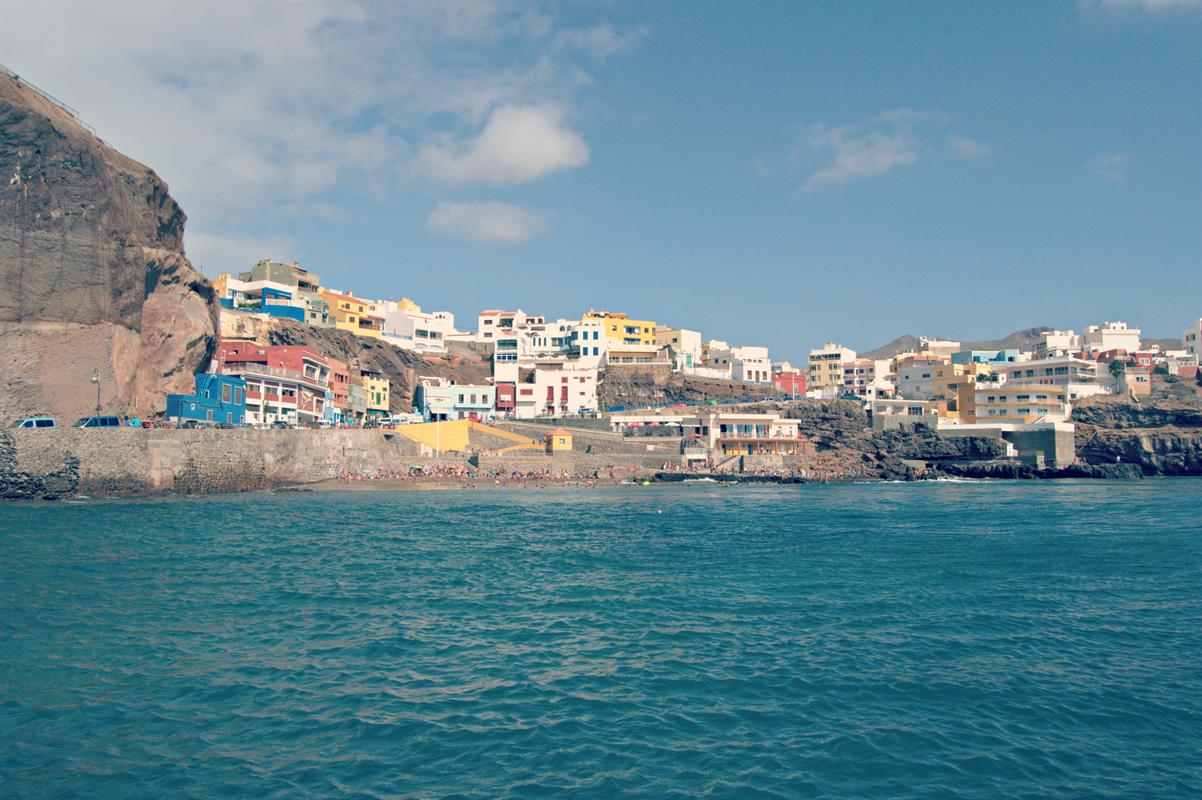
Eating My Way Around Sardinia
One of my main aims for the trip was to try as many traditional Sardinian dishes and local products as possible. Seafood, pasta, cheese, bread, wine, local beer. And I made a list. And Sardinia didn't disappoint.
BY SLAV ADAMEK
Sardinia had been on my travel list for a while, but before going there I discovered something that made me even more interested in the island. It is home to one of the world’s famous Blue Zones, places where people are known for living unusually long and healthy lives.
Of course, there are many reasons for this, but food seems to play a big part. A traditional Sardinian diet is simple and local, with plenty of vegetables, bread, cheese, olive oil and wine. But it is not only about what they eat. It’s also about how they eat. Taking time over meals, sharing food, drinking wine and gathering around the table with family and friends.
So naturally, before the holiday I did my research.
One of my main aims for the trip was to try as many traditional Sardinian dishes and local products as possible. Seafood, pasta, cheese, bread, wine, local beer. And I made a list.
And Sardinia didn’t disappoint.
Food Experience 1.
First taste of Sardinia
Our first proper Sardinian meal came almost immediately after we arrived.
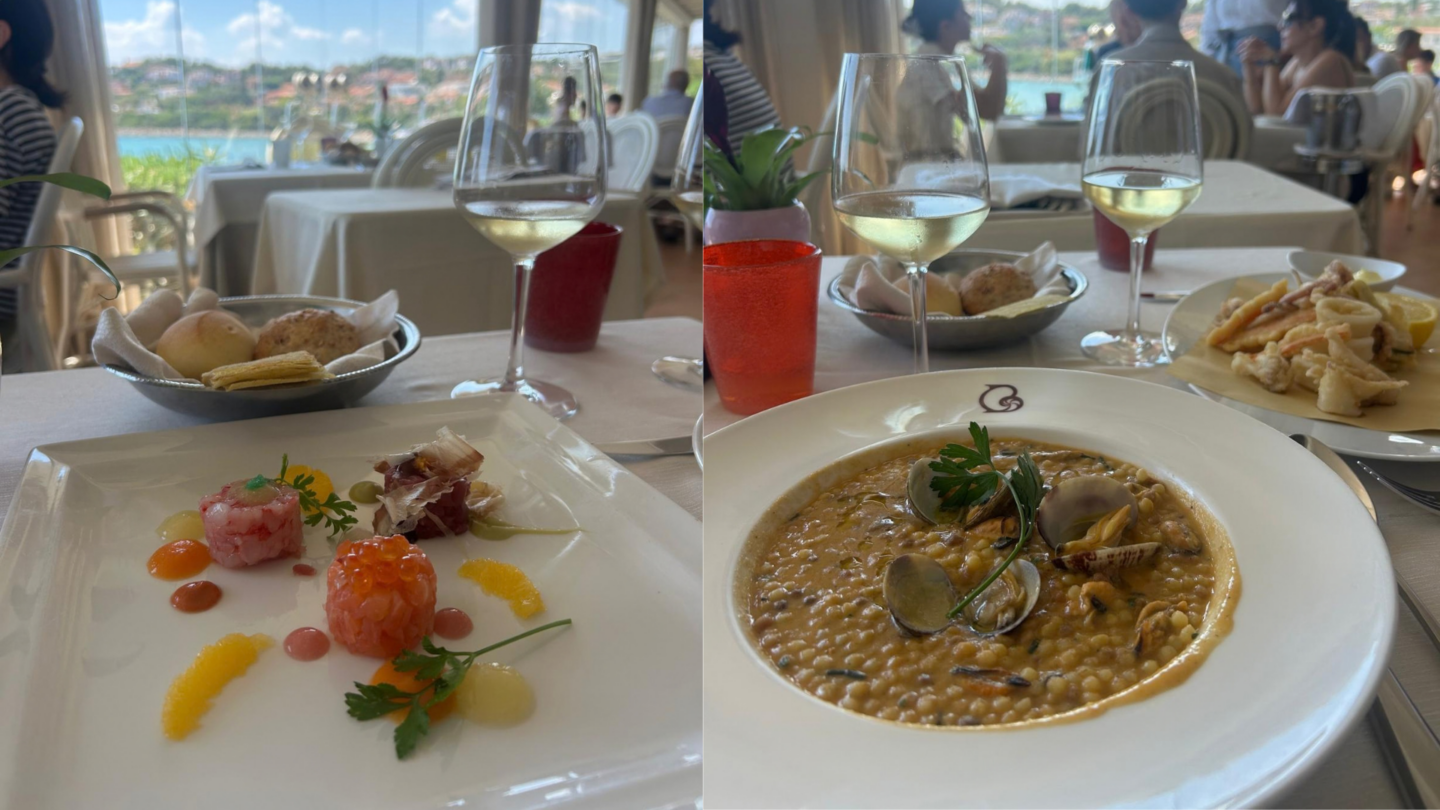
We went to La Bitta in Arbatax, a beautiful hotel restaurant overlooking the turquoise water of Porto Frailis. If you’re going to start a Sardinian food journey, sitting beside the Mediterranean with a bottle of chilled local wine isn’t a bad way to do it.
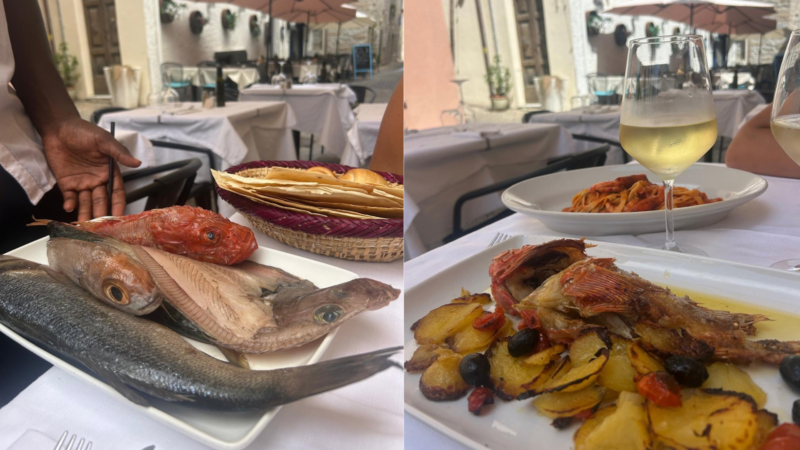
We started with seafood tartares – tuna, salmon and swordfish – alongside fresh crudo, followed by one of the dishes I’d particularly wanted to try: fregola ai frutti di mare. Fregola is a traditional Sardinian pasta made from little toasted balls of semolina, almost like a cross between couscous and risotto, and ours came packed with seafood.
There was also fritto misto di mare, including beautifully light fried calamari, all accompanied by our first bottle of Sardinian Vermentino.
While we were eating, we got chatting to an older waiter and asked him the important question: “What is the best wine in Sardinia?”
His answer was very clear. “It must be Vermentino from the north of the island, particularly Gallura around Olbia”. He told us that’s where we should look for the best ones.
It was only our first meal, but we’d already learned something useful. For the rest of the trip, whenever we saw Vermentino di Gallura on the wine list, we knew what to order.
And as it turned out, he was right. We drank quite a few of them over the next few days. 😄
We hadn’t been on the island very long and I was already ticking dishes off my list.
Food Experience 2.
Lunch at sea
The next day, our dining room looked slightly different.
We hired a speedboat from Santa Maria Navarrese and spent the day exploring Sardinia’s incredible east coast. We were swimming in ridiculously clear water, stopping at secluded beaches and finding little coves that are much easier or even only possible to reach from the sea.
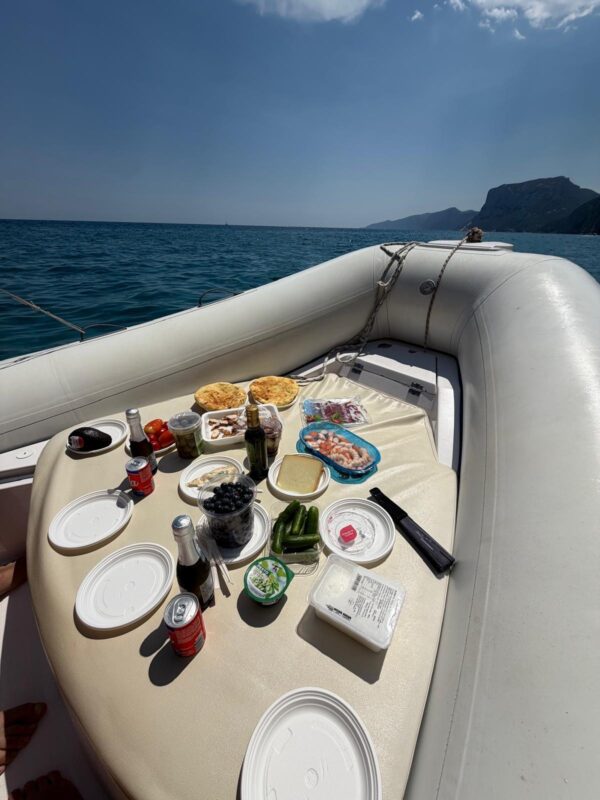
For lunch, we stopped the boat and spread out our own Sardinian picnic.
We had pecorino and soft cheese, cured meats, olives, tomatoes, seafood including octopus, local bread and plenty of little snacks, washed down with mini bottles of Prosecco.
There was something brilliant about jumping into the Mediterranean, climbing back onto the boat, having a few bites of cheese and cured meat and then jumping straight back in again. Definitely one of the better lunch spots I’ve had.
Food Experience 3.
From the sea to the mountains
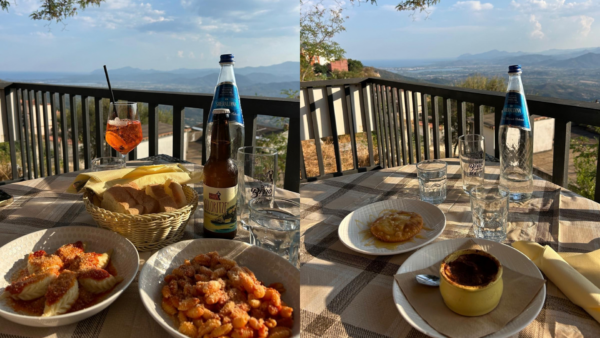
Our third experience took us away from the coastline and up into Baunei, a small mountain village sitting high above Santa Maria Navarrese.
This was exactly the sort of local place I’d been looking for.
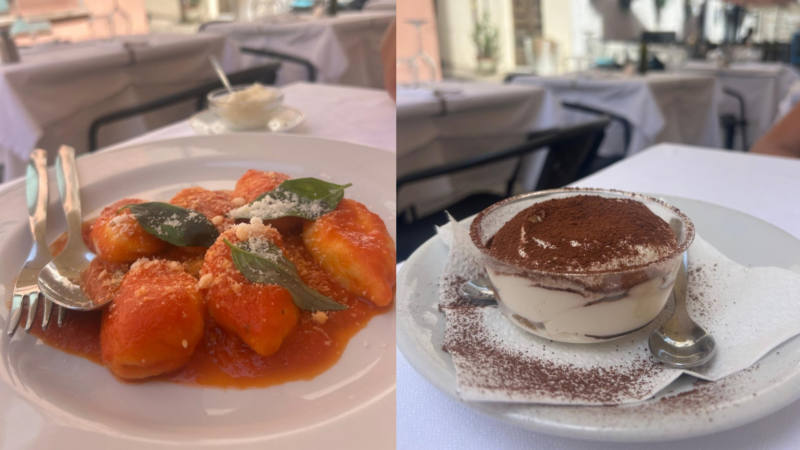
We tried two of Sardinia’s best-known pastas. First were culurgiones, beautiful hand-shaped pasta parcels traditionally filled with potato, pecorino and mint. Alongside them came malloreddus, often called Sardinian gnocchi. Tiny ridged pieces of semolina pasta that are perfect for holding a rich sauce.
Instead of wine, this time we tried a bottle of Goloritze craft beer, named after the spectacular Cala Goloritze nearby.
Dessert was another Sardinian box ticked: seada, fried pastry filled with cheese and covered with honey.
And because apparently one dessert wasn’t enough, we also ordered Tiramisu, an Italian classic.
Traditional Sardinian pasta, local beer and dessert, sitting in the mountains looking back towards the Mediterranean. Not bad at all.
Food Experience 4.
Pizza on the beach after Gorropu
After spending the whole day hiking Gola di Gorropu, one of the deepest canyons in Europe, we were absolutely starving.
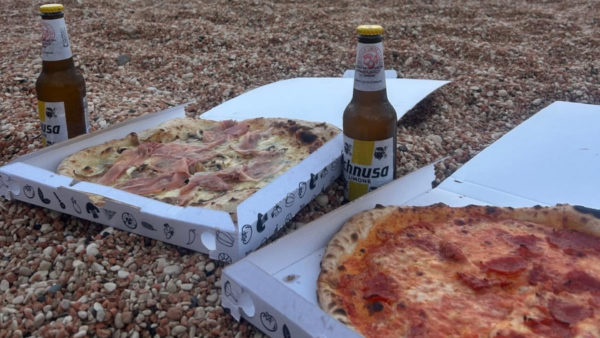
That evening we drove down to Cala Gonone, grabbed a couple of pizzas and took them straight onto the beach.
And let’s be honest. You can’t go to Italy on a food mission and not have pizza.
We went for a classic salami pizza and a Gorgonzola pizza with prosciutto and mushrooms. Nothing fancy this time. Just proper Italian pizza straight from the box, sitting on the pebbles with the sea in front of us.
To go with it, we tried Ichnusa Limone, Sardinia’s local lemon beer. Cold, light and refreshing, it was exactly what we needed after a long, hot day in the mountains.
No restaurant, no table and definitely no fine dining. Just pizza, local beer, the beach and a pretty great end to the day.
Food Experience 5.
The full Sardinian Experience
This was probably the highlight of my whole Sardinian food journey.
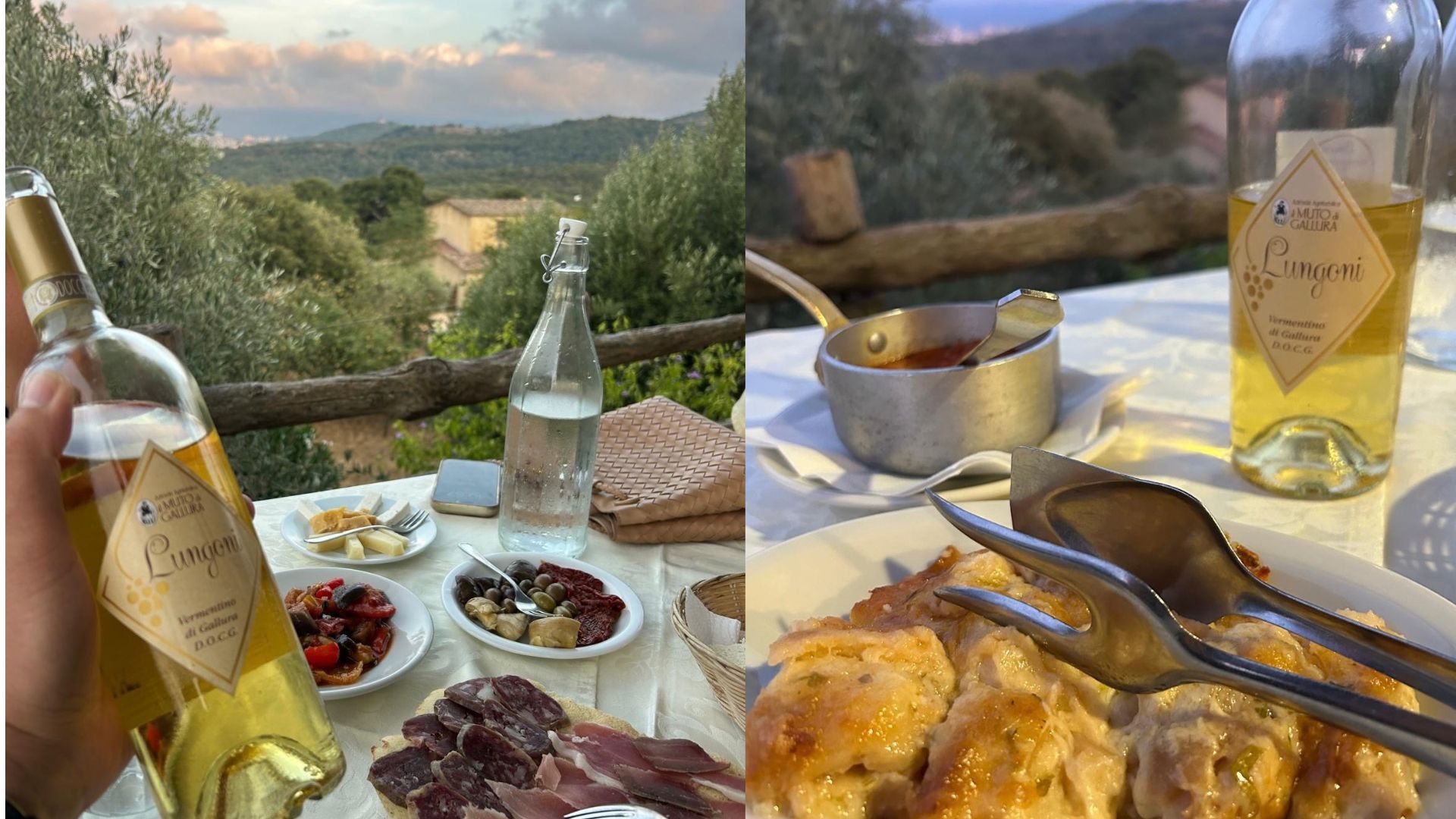
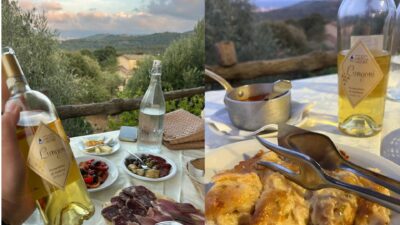
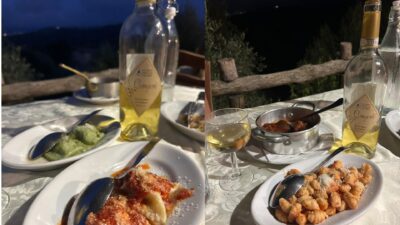
We went to Il Muto di Gallura, a proper agriturismo hidden in the countryside near Aggius. This wasn’t about choosing something from a menu. We basically sat down and let them feed us.
And they fed us. A lot.
It started with a table full of local salami and prosciutto, cheeses, olives, artichokes, sun-dried tomatoes and vegetables.
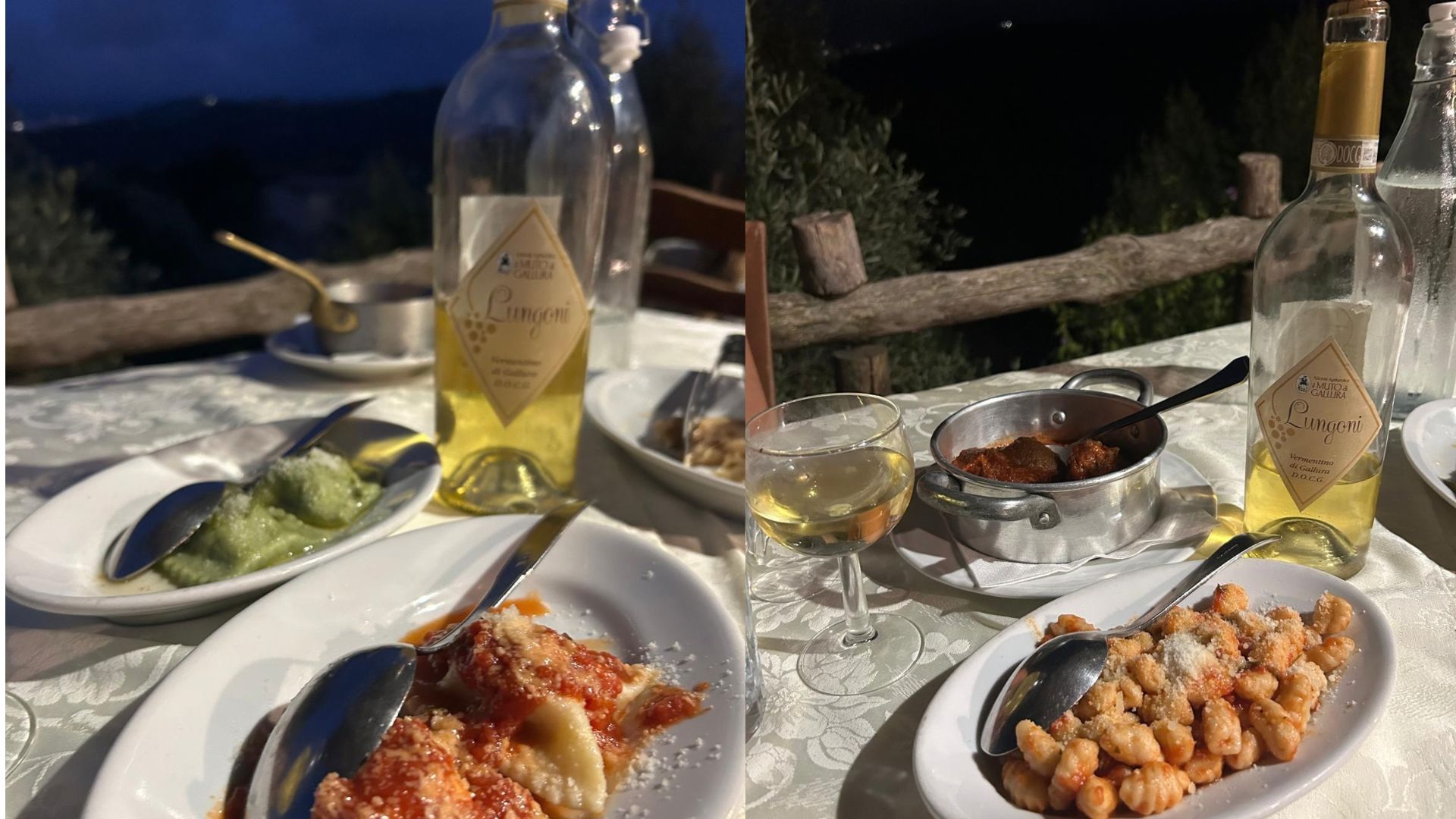
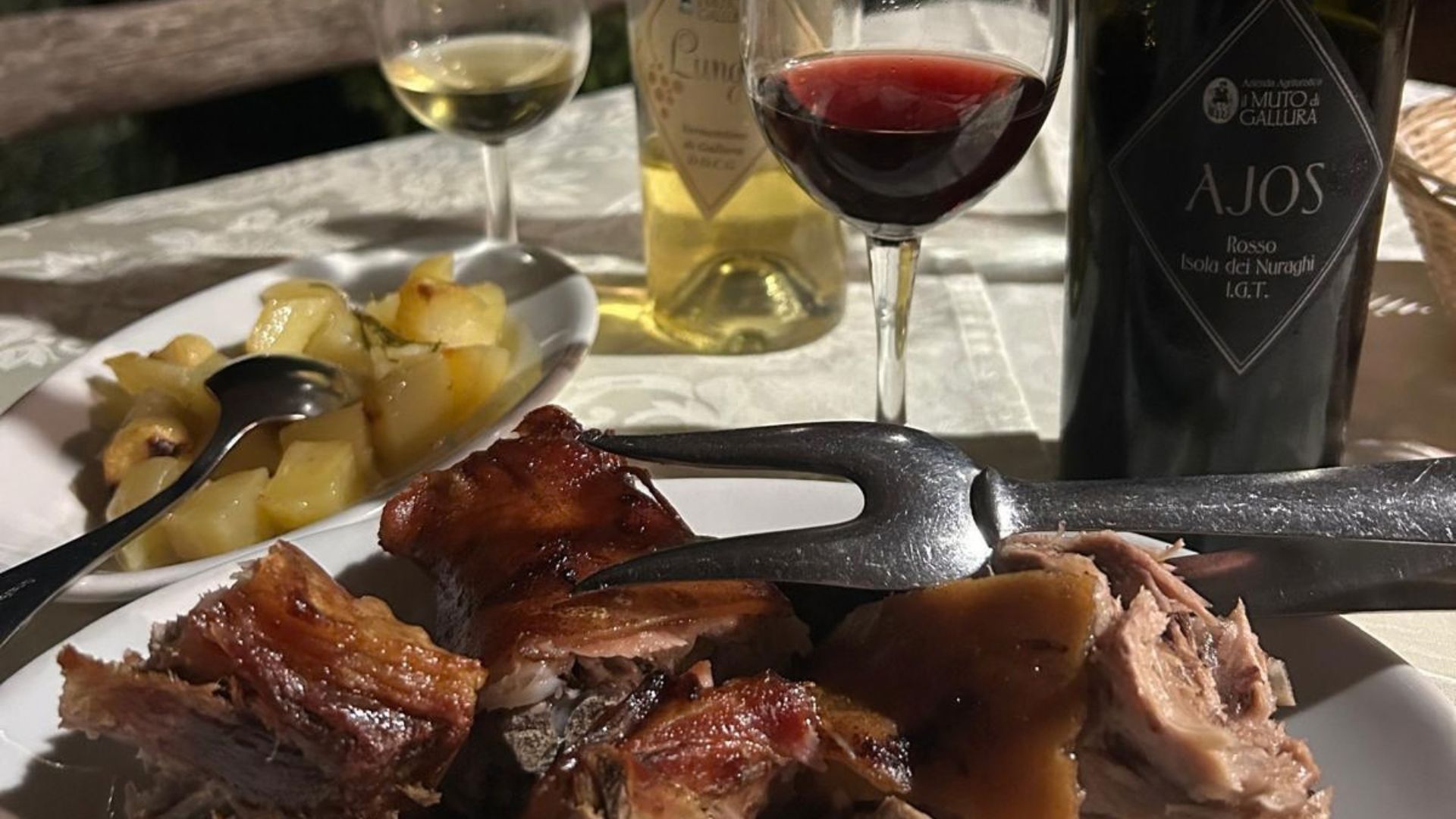
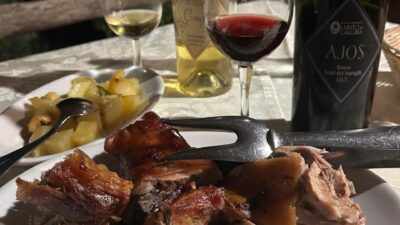
Then the food just kept coming: traditional pasta, Gallurese dishes, ravioli and gnocchi, followed by roast suckling pig, sausage and potatoes.
Eventually we reached the point where we genuinely couldn’t eat anymore.
That didn’t seem to bother the owner.
More food kept arriving while he simply told us:
“Piano, piano.”
Slowly, slowly. 😂
So we listened. We slowed down… and ended up staying for four hours.
Somehow during those four hours we also managed three bottles of wine, including their own Lungoni Vermentino di Gallura and Ajos Rosso.
Eventually we finished with local fruit and a little glass of sparkling homemade Sardinian Moscato.
Four hours, countless plates, three bottles of wine and one very determined Sardinian host who simply wouldn’t let us stop eating.
This was exactly what I’d hoped to find when I started researching Sardinian food. Local produce, local wine, traditional recipes and absolutely no rush. A proper Sardinian feast.
And everything in between…
The Sardinian food mission didn’t stop when we left the restaurants.
Wherever we went, we were looking for something local to try.
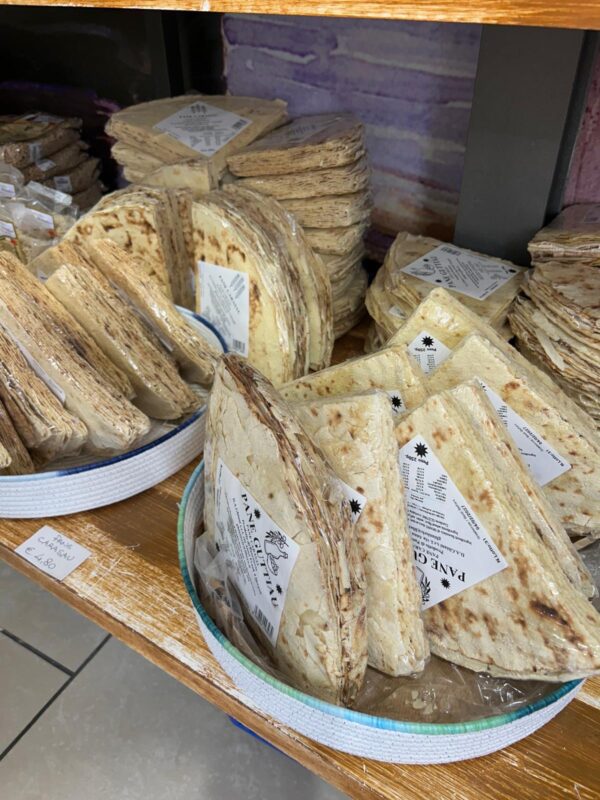
There was pane carasau, the incredibly thin, crispy Sardinian bread that seemed to be everywhere. Traditionally it was made to last so shepherds could take it with them while travelling, and we saw huge stacks of it in local bakeries and shops.
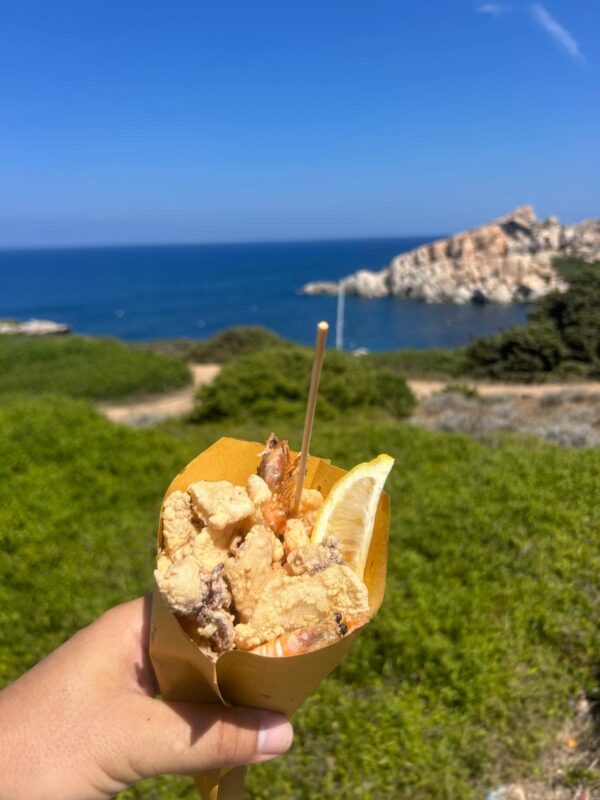
There was fritto misto eaten from a paper cone overlooking the sea. Calamari and prawns, fried until crisp and finished with lemon. Sardinian fast food definitely ticked my boxes.
We tried little local pastries such as pardulas, traditionally made with ricotta, saffron and citrus.
And obviously there was gelato. Plenty of gelato.
None of these were big, planned meals, but they were all part of the experience and trying something local whenever we saw it and basically eating our way around the island from morning until night.
One last taste of Sardinia was straight from the cactus
There was one final Sardinian food experience that didn’t involve a restaurant at all.
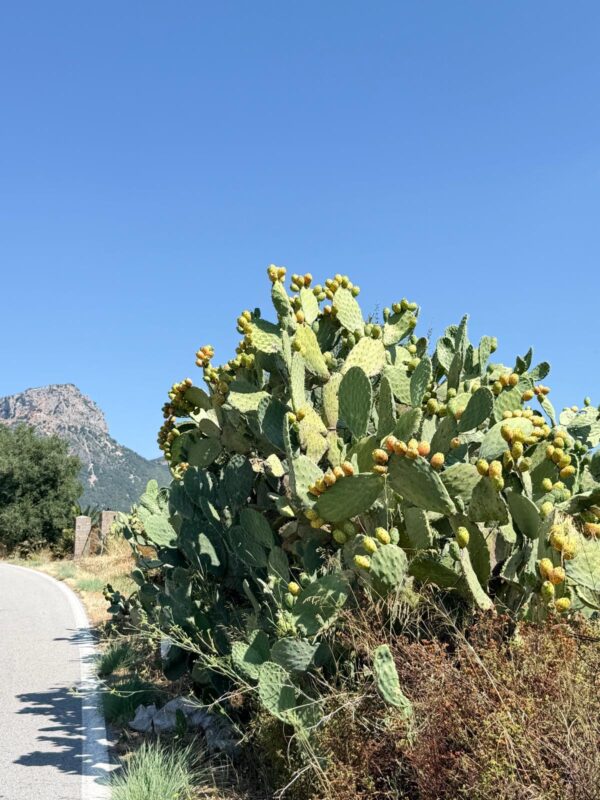
We were lucky with the timing of our trip because the island’s prickly pears, fichi d’India, were covered in fruit.
Once we realised they were edible, obviously we had to try them.
We even researched how to pick them without getting covered in the tiny, almost invisible spikes and constructed our own sophisticated harvesting machine from cardboard and plastic cups.
It didn’t work.
I still ended up with my hand full of tiny spikes. 😂
But after all that effort, there was absolutely no chance I wasn’t eating one.
And actually, it was worth it. Inside that intimidating cactus skin, the fruit was soft, juicy and refreshing, somewhere between watermelon, pear and melon, with a gentle honey-like sweetness and lots of crunchy little seeds.
Probably the most difficult snack I’ve ever had to work for.
But you can’t get much more local than picking your dessert from the side of a Sardinian road.
So, what’s the secret?
Did one week of eating Sardinian food teach me the secret to living to 100?
Probably not.
But I did understand a little better why food is such an important part of life there.
Yes, the ingredients matter. Sardinia has incredible seafood, cheeses, bread, pasta, vegetables, meat and wine. But some of my favourite memories weren’t necessarily about the best dish.
They were about where and how we ate it.
Lunch on a boat between swims. Handmade pasta in a mountain village. Pizza from a cardboard box on the beach after a day of hiking. Four hours around a table while an agriturismo owner kept bringing food despite us begging him to stop.
Maybe that’s the bit of the Sardinian diet that’s hardest to put into a recipe.
Good food, good wine, great company and, as we were repeatedly reminded, piano, piano.
Maybe they’re onto something.