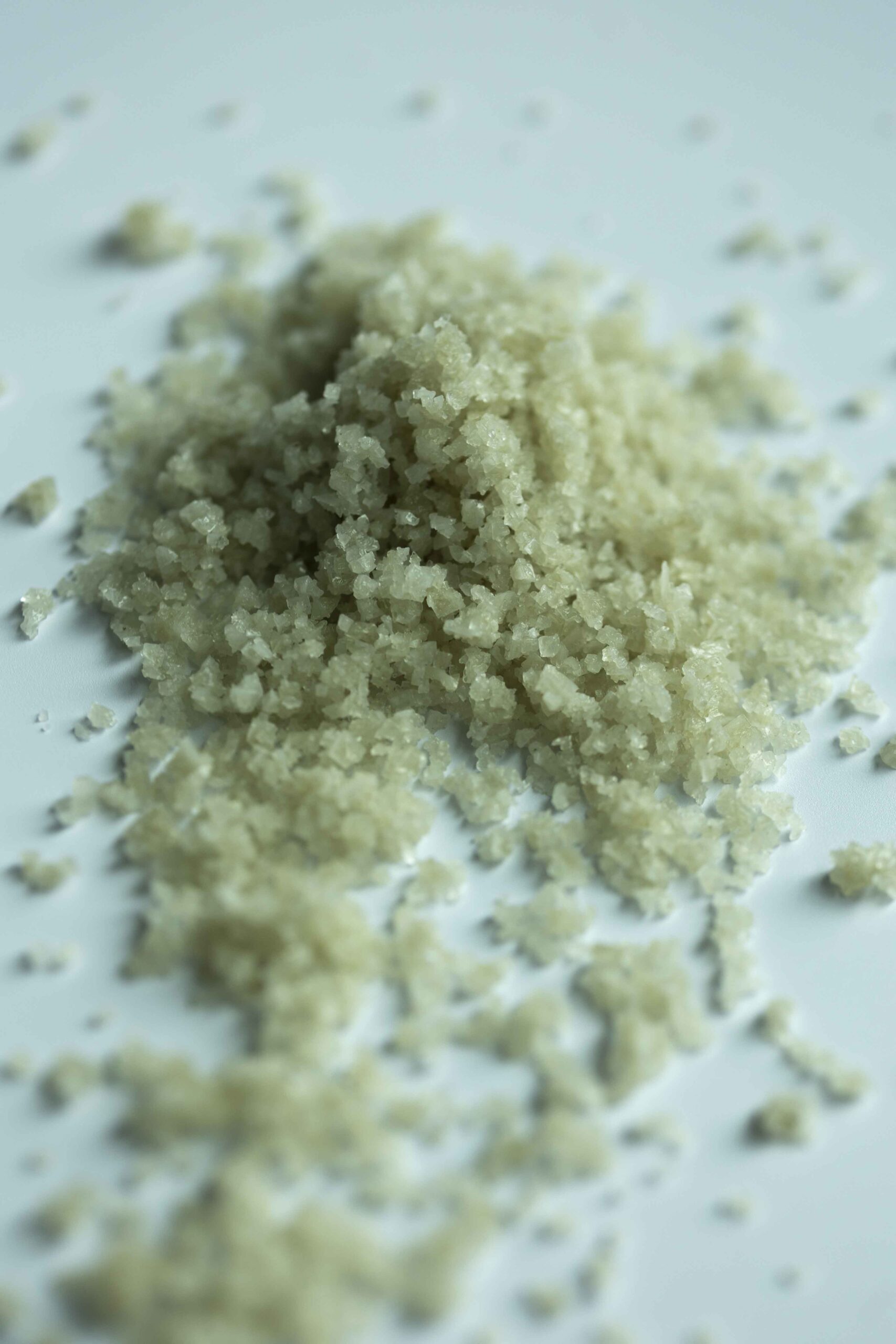
Salt of the Earth
I want to talk about salt.
BY BEN TOBIN-PARIS
So here’s the thing. Again, for the second time, my Smart Supper Club entry isn’t about a meal, a dish, or even a restaurant. I know, I’m sorry! I did the same thing last time with Italy, and here I am again, breaking the rules. Except this time it’s worse, because I’m not even going to pretend there’s a plate of food at the centre of it. I want to talk about salt.
For very obvious reasons, I have spent a lot of time thinking about salt recently. When we tendered to create the joint venture with Broadwick, we gifted a copy of Salt, Fat, Acid, Heat to everyone from Broadwick who attended the presentation, and that was the moment we first started thinking Salt could be a great name for a catering brand. The spiel is that it’s an essential ingredient, never derivative, always quietly confident, and so on. Then via a funny Instagram post Paige shared with me, I found Salt: A World History by Mark Kurlansky, and my lord, my brain is so full. I did not expect to become completely, helplessly obsessed with what is essentially a rock.
The facts in this book are wild, five hundred pages of wild, properly, brilliantly wild. Roman soldiers were paid in salt, and that is where we get the word salary from. The first roads on earth weren’t built by humans at all. They were carved out by animals following their own paths to salt licks, and humans simply came along afterwards and widened them. We think of roads as one of civilisation’s great inventions, and really we just followed the deer to salt.
And it does not stop there. In Austria, the Hallstatt salt mines are among the oldest in the world, worked for thousands of years, and they were so central to the region that they gave their name to an entire era of prehistory, the Hallstatt culture. Salzburg down the road quite literally means “salt castle.” Venice built an empire on it, controlling the salt trade so tightly across the Mediterranean that it destroyed rival saltworks just to keep its grip on the market. In France, a hated salt tax became such a symbol of royal excess that it helped tip public anger into revolution, let them eat cake? No Marie, let them have salt!
Liverpool grew into the port it became largely off the back of the Cheshire salt trade, shipped out through the docks to the rest of the world. And the American Civil War genuinely turned on it, with the North producing something like five times more salt than the South, and Union armies deliberately hunting down and destroying Confederate saltworks because no army could preserve meat or march for long without it.
Then there’s Gandhi. The Salt March of 1930 was one of the most powerful acts of civil disobedience in history, and it was about salt. The British had taxed and monopolised it so heavily that simply walking to the sea to make your own became an act of revolution. No salt, no army. It is extraordinary how something so ordinary has quietly shaped wars, empires, economies and entire cities.
We shake it onto chips without a second thought, but for most of human history salt was one of the most valuable substances on the planet. Wars were fought over it, cities were built on it, currencies were built from it. It preserved food long before refrigeration existed, and without that ability entire civilisations simply could not have grown, traded or travelled the way they did. It is genuinely one of the reasons complex human society was possible at all.
And of course, underneath all the history, it is still doing the thing it has always done best. It is not just a preservative or a currency or a cause worth marching for, it is the ingredient that makes everything else taste like itself. It sharpens sweetness, rounds off bitterness, and pulls flavour out of food that would otherwise sit there flat and forgettable. The difference between a good dish and a great one is very often just salt, used properly and with a bit of nerve. It is essential in the truest sense of the word, not a seasoning you add at the end but one of the foundations everything else is built on.
So there you have it, I’m sorry again, I’m not actually here to talk about a restaurant or a meal, I need to talk about salt, I am absolutely bursting with these facts and I simply cannot contain myself. Next time you reach for that salt shaker, give it a moment’s thought.